BAPTISM BY FIRE. 2013-14
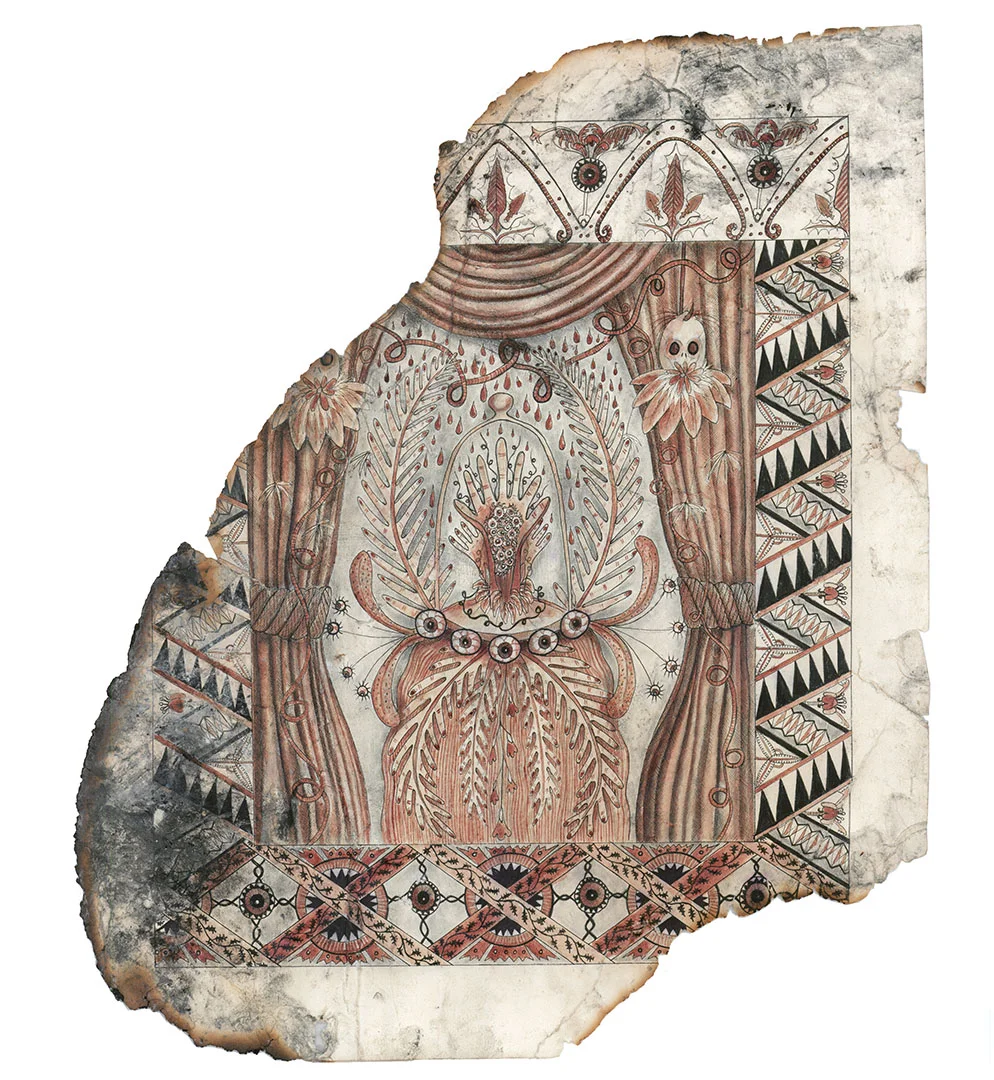
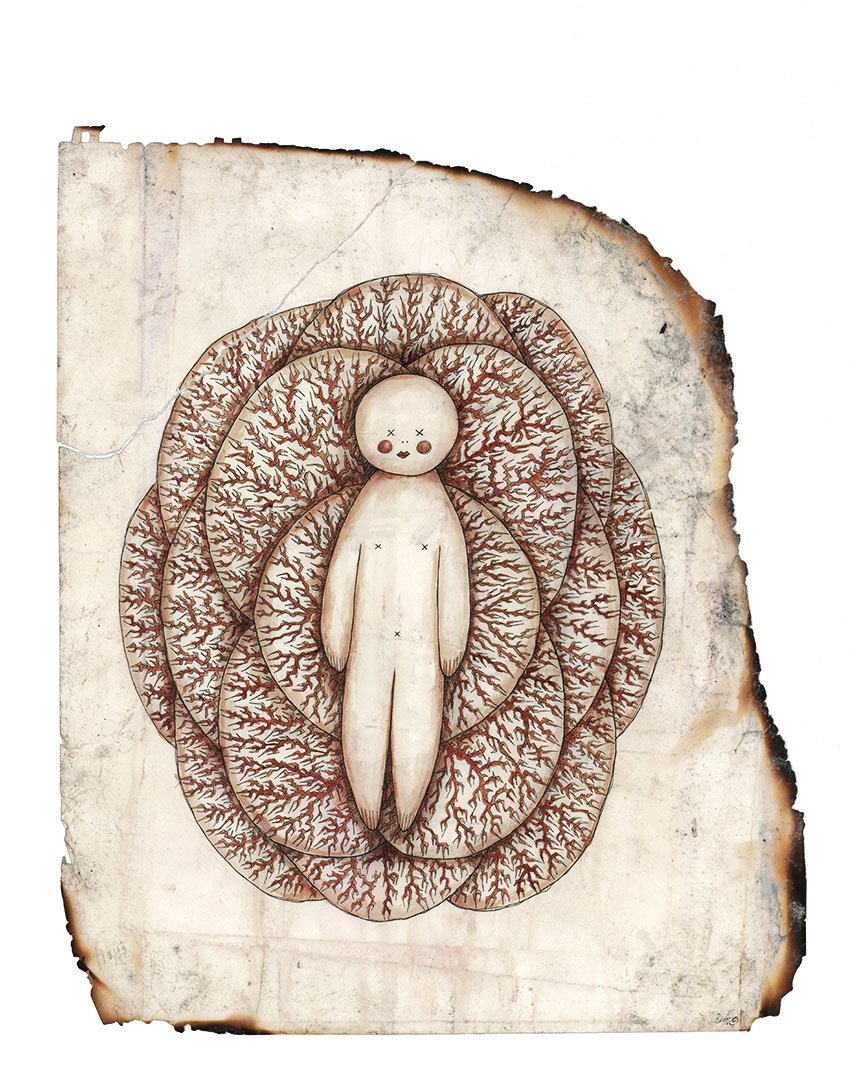
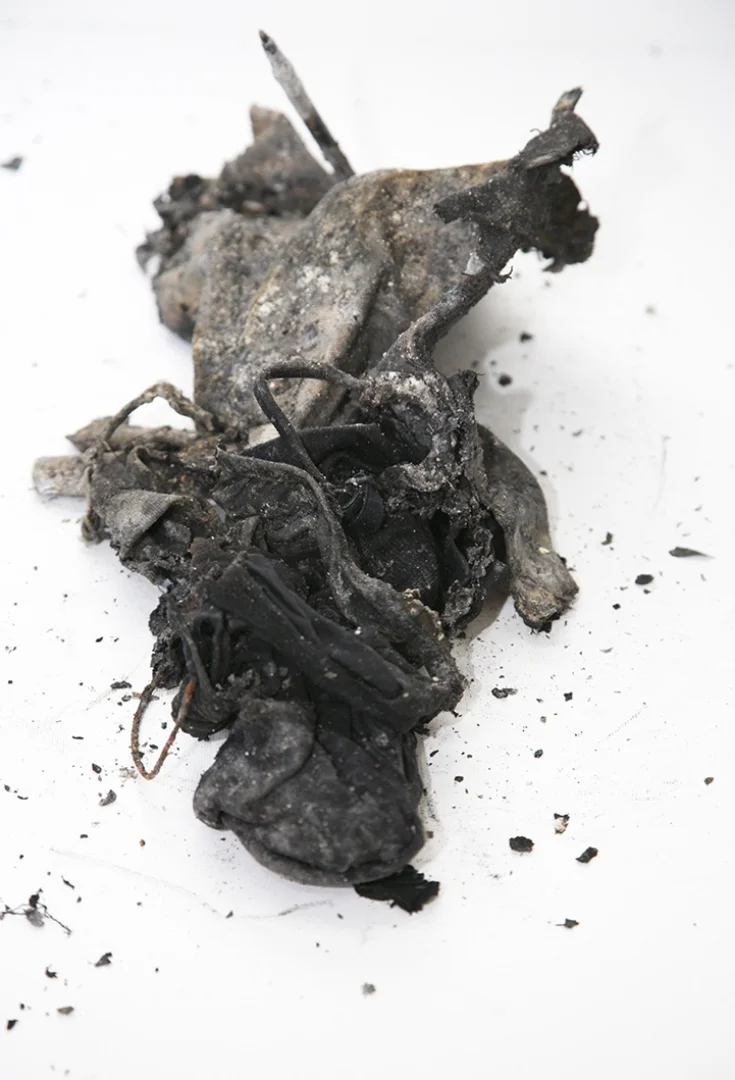
At the core of Baptism by Fire is hundreds of illustrations that survived a house fire. Pages of unseen work from her book The Garden, were scorched by flames, drenched by fire hoses, and buried in ash, yet remained materially intact. Gilbert dried each one in the sun and then flew them back to London, returning this charred paper through the element of air as the basis for a new cycle of work. Over the course of a year she painted into these surviving pages with her own blood and saliva, sealing them to the body that first produced them.
Moving through fire, water, air, and bodily fluids, the book and its dispersed leaves function as alchemical relics of survival, showing how work can be destroyed, remade, and recharged through the very forces that threatened to erase it. The work holds a systematic tension between the readable form of the object and the lived context from which it emerges. Using trauma as an energy point, Gilbert builds intricate codes to re-align these tensions and existential events, treating form as a site of recalibration rather than simple representation. Her key interest lies in catharsis through the creative process, and in how that process can hold a charged space within its very making.
This inward journey fuels each piece. The resulting works function as artefacts with talismanic power, objects that carry and transmit the psychic charge of their own becoming. Borrowing the language and methods of shamanic practice, Gilbert has found a tone and ritual vocabulary that hold together the psychic, the somatic, and the symbolic. Her ritualised and obsessive methods of making are meditative and operate as rites of passage, marking movement from one state to another.
Within this, Nigredo names the alchemical process the work passes through: the stage in which matter is reduced to a blackened residue before being reconstituted into a more luminous state associated with albedo or whitening. Here, nigredo is not a distant metaphor but the operative condition of the project, the lens through which the fire, its losses, and its strange survivals are continually reworked.
This perverse closeness to catastrophe maps Gilbert’s process of making, which moves through psychoanalytic, spiritual, and satirical engagements with trauma. The work is realised through a ritualistic, alchemical process using compounds derived from the charred remains of the fire, combined with her own blood. Each piece stands as a symbolic gesture of a baptism by fire, and an insistence that from ruins and residue, new forms and new selves can begin.