
THE MAIDEN. 2023




The Maiden: A Manifesto from the Wounded Divine
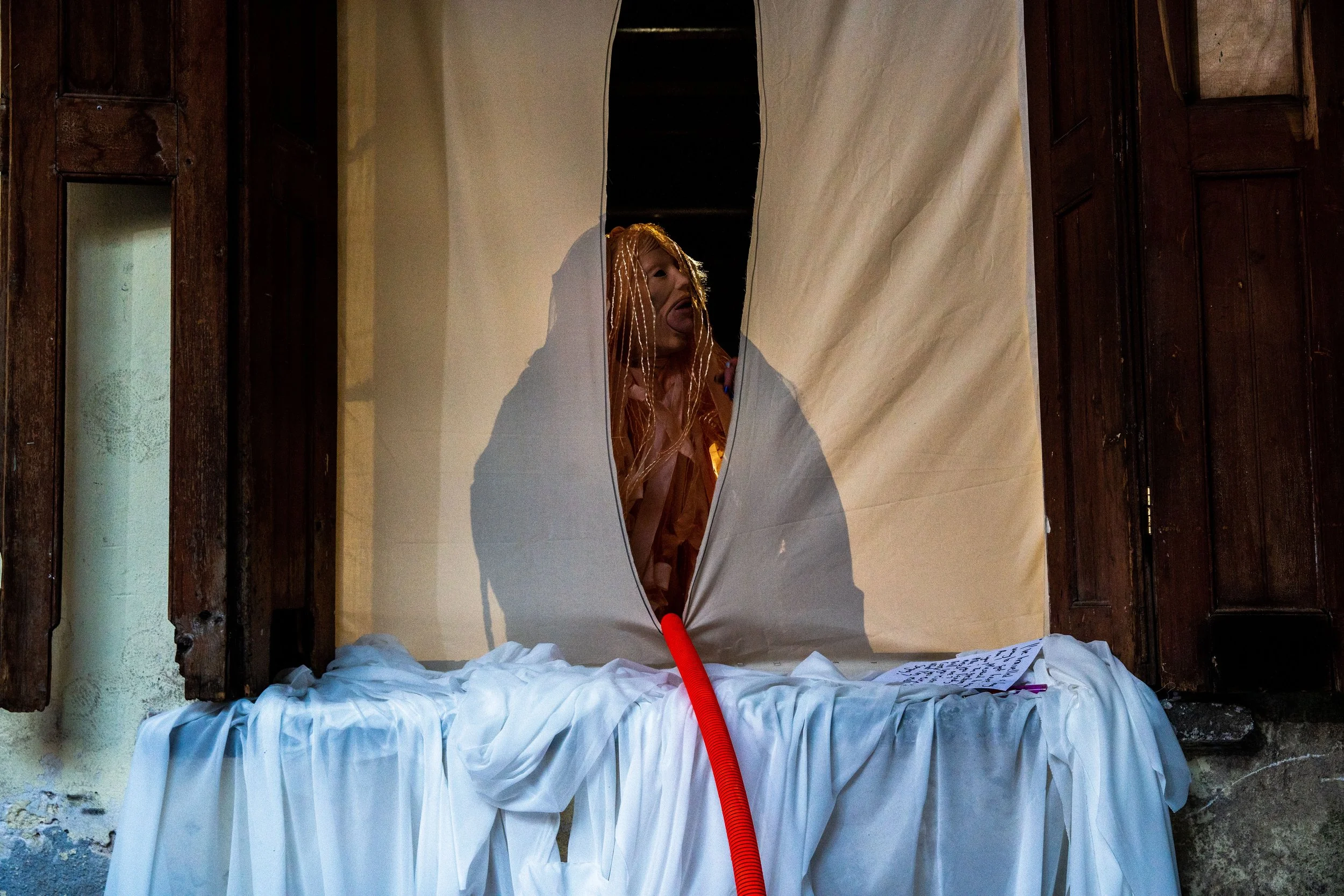
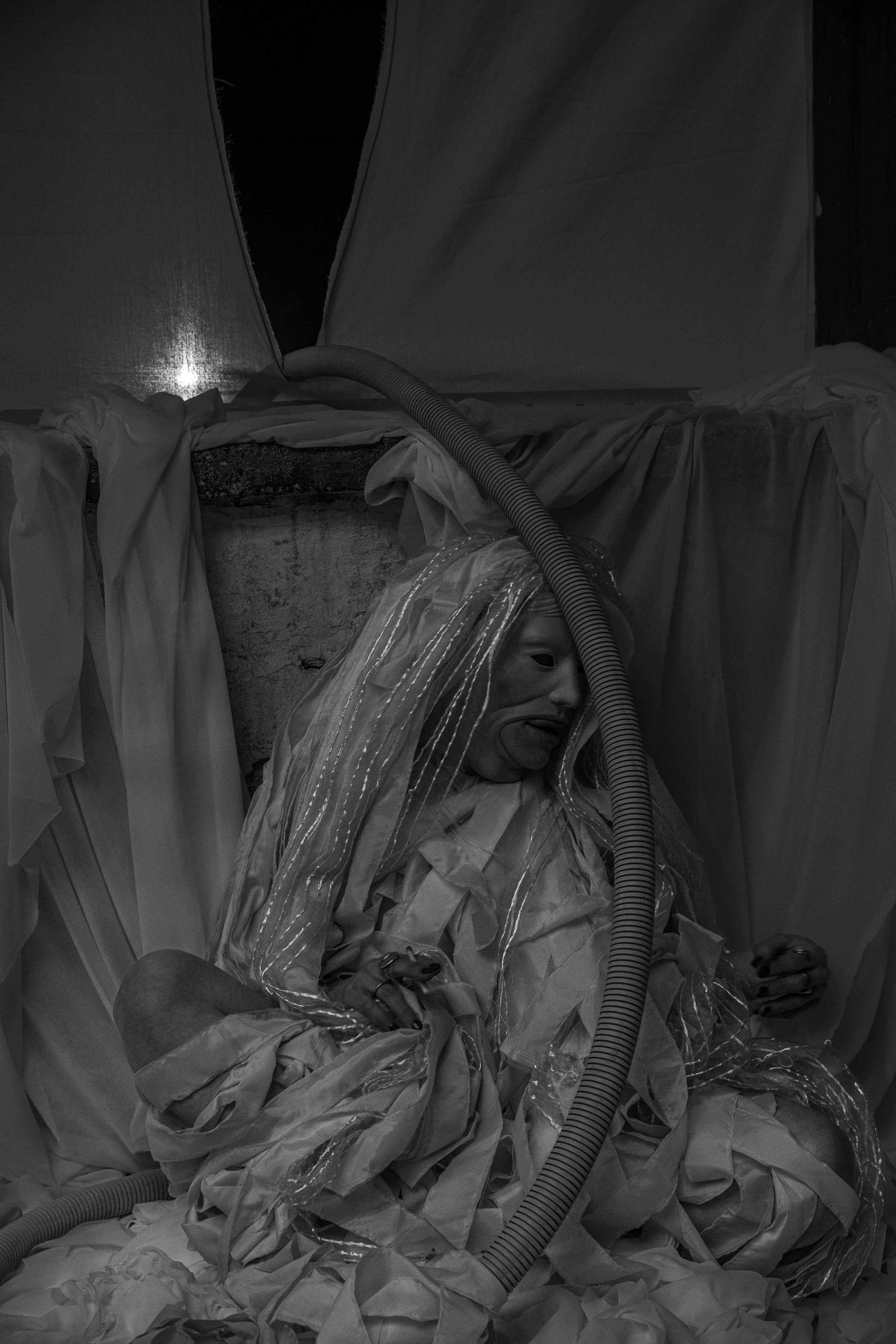
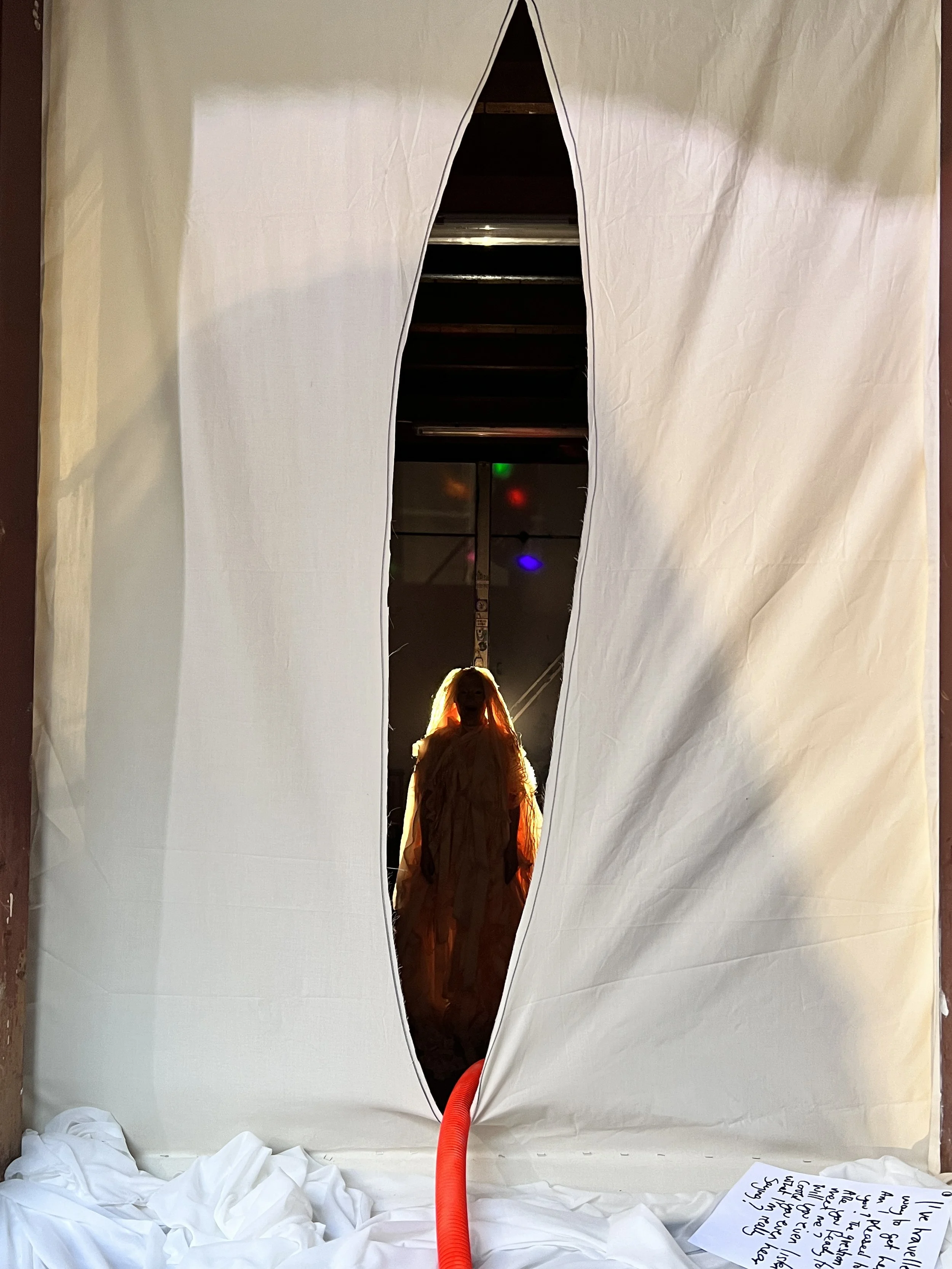
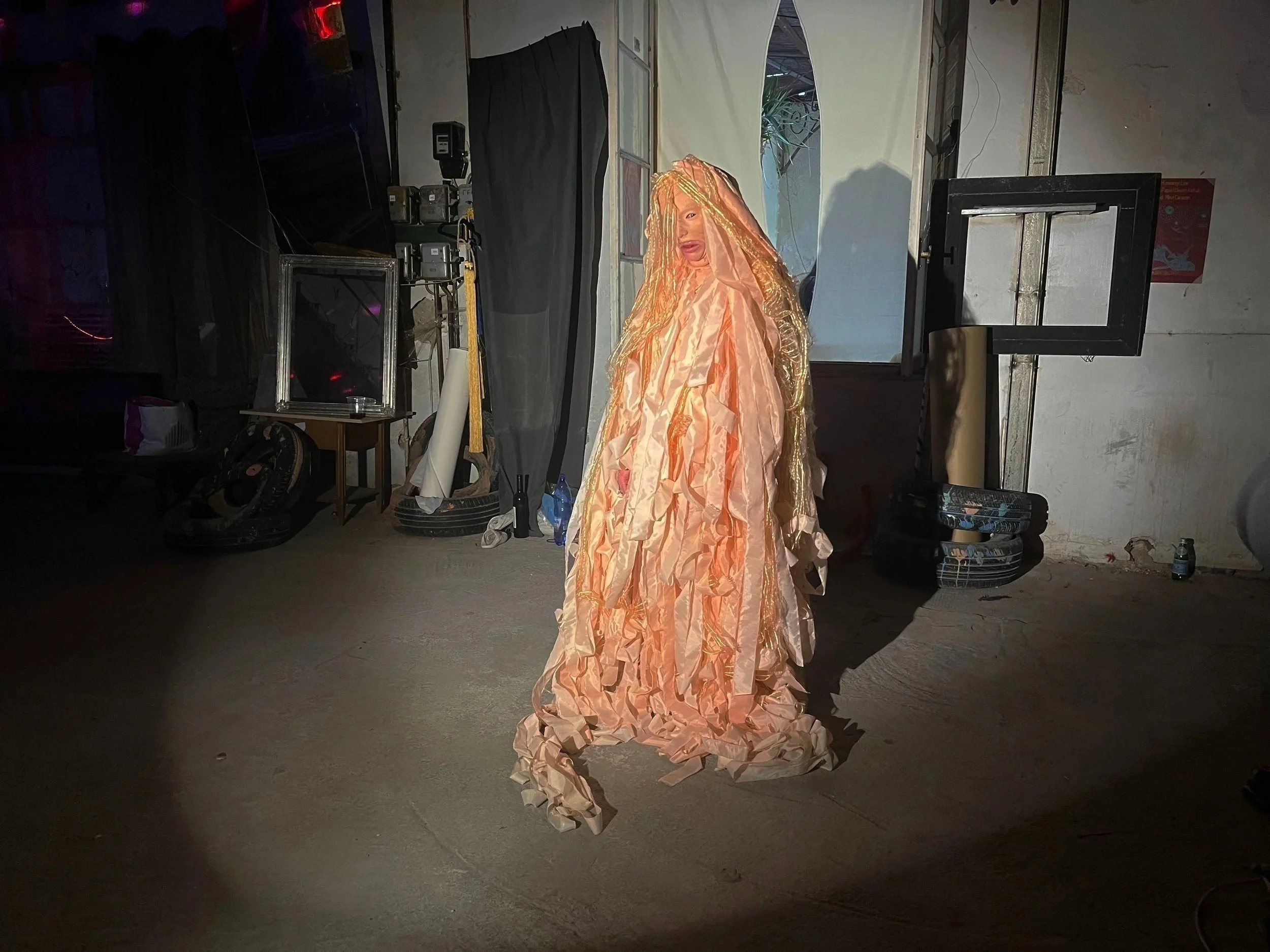
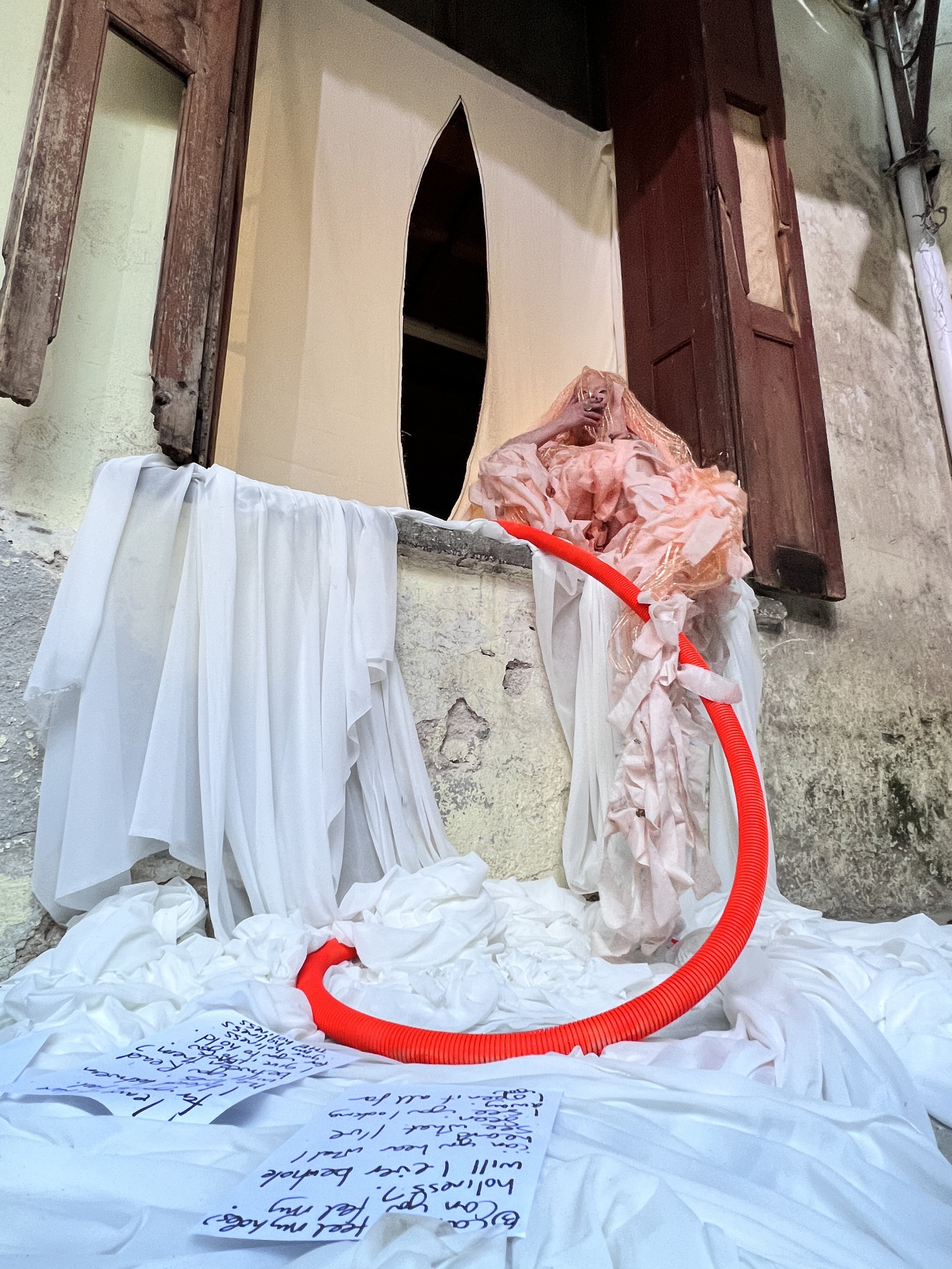
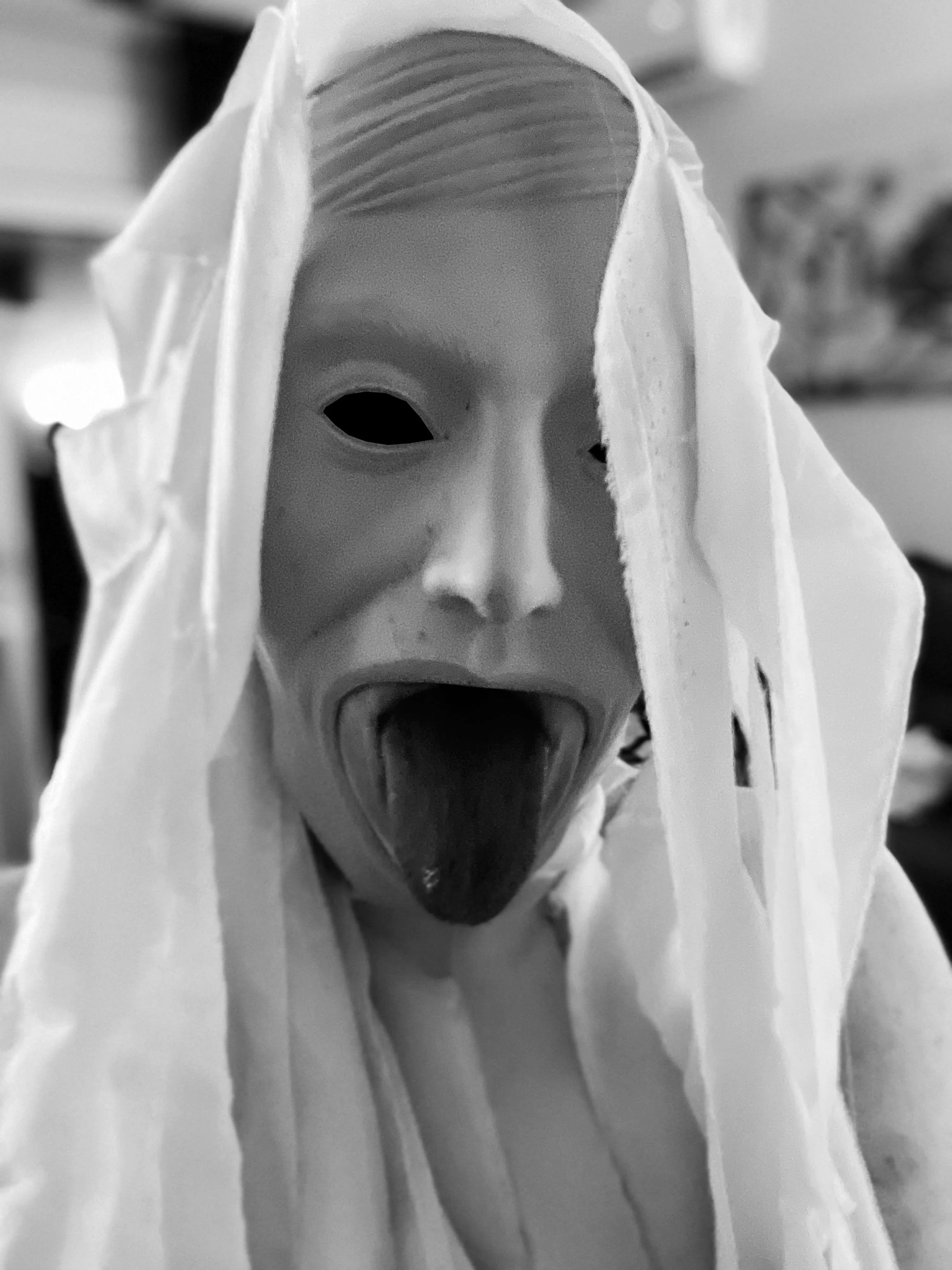
Devised during Ron Athey’s Darkness Visible residency, The Maiden emerges as a radical reimagining of Mary Magdalene not as penitent or redeemed, but as a time-travelling oracle who steps through a vaginal portal: the primordial threshold of birth and becoming. She is not one woman, but a living synthesis of Gaia and a pantheon of earth goddesses; Inanna, Sekhmet, Kali, Aphrodite, and countless others whose voices have been silenced, distorted, or subsumed within patriarchal mythologies.
Anthropologically, the Maiden channels the archetype of the Great Mother: Earth as sentient, fertile, and violated Gaia, whose cycles and intelligence have been both worshipped and exploited across cultures and epochs. Her return is not a gentle visitation, but a rageful, absurdist incursion.
The performance begins out of sight: screaming and moaning through a neon washing machine flexi pipe. She then crawls, creature-like, from a fabric vesica piscis, immediately producing a cigarette and asking the audience for a light. With palpable disdain, she begins her lecture: “Take note of my notes.” What follows is a visceral articulation of a collective sickness born from the systematic repression and exploitation of the feminine principle. Furious at having to traverse realms to deliver this “moanalog,” she exposes how the sacred, creative, and destructive forces of the feminine have been domesticated, demonised, and commodified—her message echoing James Lovelock’s Revenge of Gaia, in which the Earth, as a living system, inevitably corrects the imbalances wrought by human hubris.
The Maiden operates as a palimpsest: Magdalene the witness, Inanna the descender, Kali and Sekhmet the destroyers and renewers, Aphrodite the lover, Seshat the scribe of sacred inscription. In collapsing these figures into a single body, the performance disrupts linear time and singular identity, revealing the divine feminine as cyclical, plural, and inexhaustible. Her emergence through the vaginal opening becomes an act of reclamationof origin, power, and narrative.
The work confronts the audience with the consequences of entrenched dualisms—spirit and matter, culture and nature, masculine and feminine, that have underpinned Western metaphysics and justified the subjugation of both women and the Earth. Her lecture is both accusation and invitation: a call to unlearn, to re-embody, and to restore a sense of reciprocity with the living world. It insists that the fate of the Earth is inseparable from the fate of the feminine, and that redemption lies not in domination, but in radical remembrance and reparation.
The Maiden is not merely a character, but a living myth an absurdist act of resistance and re-enchantment. Channeling rage, grief, and dark humour, she gives voice to what has been suppressed. Dripping with sarcasm and fuelled by fury, she offers the possibility of change, should we choose to take note.